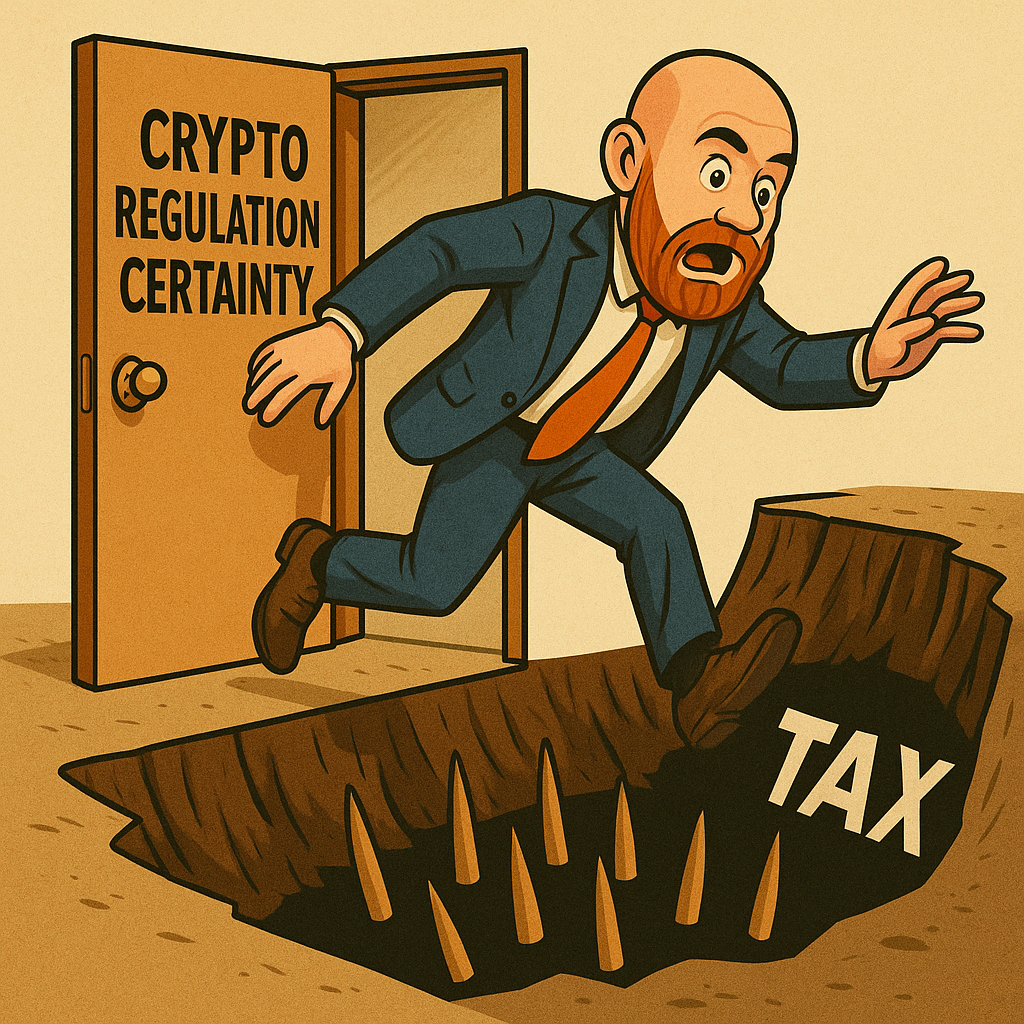
The new definition of fixed trust lets a unit trust carry different classes of units and still sit outside the 30% minimum tax. That makes a fixed hybrid trust the natural choice for families whose members need different rights, but only if the deed leaves the trustee no material discretion over who gets what.
This article goes deeper on one of the five options in our guide to restructuring out of the 30% trust tax. It covers how the second limb of the new definition works, what the trustee can still decide, how the deed can be amended, and what to check before relying on it.
Why the second limb matters
From income years starting on or after 1 July 2028, a trust that is not on the list of exclusions is a minimum tax trust, and one of the exclusions is a fixed trust (s 101AB of the Income Tax Assessment Act 1936). The Treasury Laws Amendment (Tax Reform No. 3) Bill 2026 replaces the definition of fixed trust in s 272-65 of Schedule 2F to that Act. The new definition applies across the whole tax law, not just for minimum tax.
The first limb is the existing test, under which the beneficiaries have fixed entitlements to all of the income and capital of the trust. The Explanatory Memorandum says this keeps every trust that was previously a fixed trust as a fixed trust.
The second limb is new. A trust is also fixed if there are no material discretionary elements capable of significantly affecting the entitlements or rights of the beneficiaries to the income or capital of the trust. The Explanatory Memorandum explains that the old definition had been read quite narrowly, so relying on it alone would have caught more trusts than the policy intended.
The practical result is that a trustee can keep some residual discretion, whether under the deed or by operation of law, and the trust can still be fixed, provided that discretion cannot significantly affect what the beneficiaries are entitled to.
Discretionary hybrid and fixed hybrid compared
A hybrid trust, in the sense used here, is a unit trust with more than one class of units, where each class carries different rights to income, capital or both. The older style of discretionary hybrid gave the trustee a power to choose who receives income or capital, or how much. That style will not qualify under the new definition.
The Explanatory Memorandum draws the line clearly. A trust is likely to be fixed where the beneficiaries have clearly defined and enforceable rights, even if those rights are subject to rules, so long as none of the rules is discretionary. By contrast, a trust is not fixed if the trustee or another person can exercise a discretionary power to change who is entitled to income or capital, or to vary the extent of those entitlements.
A fixed hybrid therefore keeps the class structure but fixes the rights of each class in the deed. The flexibility moves from the trustee's discretion to the design of the classes and to the amendment process.
The Explanatory Memorandum's A units and B units example
The Explanatory Memorandum gives one worked example of the second limb. It is a unit trust with two general classes of units, A units and B units. The holders of each class have different but clearly defined entitlements to income and capital under the deed, and those entitlements cannot be varied.
The trustee in the example still has several powers, and the Explanatory Memorandum treats each of them as consistent with a fixed trust:
- Investment and administration. The trustee has broad discretion to invest trust property and administer the trust, including incurring expenses with a right of indemnity from trust property.
- Distributions. The trustee decides the timing and manner of distributions to unitholders, but only within the broad parameters set out in the deed.
- Units. The trustee can issue new units and redeem existing units based on a fair and reasonable valuation.
- Amendment. Changes to the deed need a special resolution supported by 75 per cent of the holders of the A and B units.
The example concludes that the trust is a fixed trust because the deed gives all unitholders clear entitlements, the trustee's discretions cannot materially affect those entitlements, issuing and redeeming units on a fair and reasonable basis cannot significantly affect them, and the deed can only be changed by a special resolution agreed by most members rather than at the discretion of the trustee or a small group.
The example is a managed investment trust, so it is a commercial illustration and not a family trust. The reasoning is the same one a family unit trust has to satisfy, but the Explanatory Memorandum does not apply it to a family deed, and a family deed will not have the widely held profile that the example assumes.
The statutory factors in plain English
Section 272-65(3) lists matters that suggest there are no material discretionary elements. They are indicators and not a checklist, and the list is expressed to be non-exhaustive.
Clearly defined rights
The beneficiaries should have clearly defined, specific and enforceable entitlements to all of the income and capital of the trust, or rights in the governance of the trust to the extent that is relevant to protecting, enforcing or giving effect to those entitlements. Rules are allowed, but none of them can be discretionary.
Limits on the trustee's powers
The Bill contemplates a range of powers that a trust may contain: to vary entitlements or rights, to issue new entitlements or rights, to issue new interests, to redeem interests or set a redemption price, to classify receipts as income or capital, and to deal with administrative matters. Each of these is consistent with a fixed trust only if it cannot be exercised to significantly vary the existing entitlements of existing beneficiaries or to significantly affect the value of their interests.
The Explanatory Memorandum adds that the words "significantly vary" and "significantly affect" are meant to leave room for minor or consequential effects of adding new beneficiaries or units.
Controlled amendment of the deed
A power to vary the deed suggests a fixed trust if it can only be exercised under the deed with the consent of all or a majority of the beneficiaries, by special resolution, or in a way that cannot materially or significantly adversely affect the beneficiaries' entitlements or rights.
Income units and capital units across generations
A fixed hybrid suits a family where different people need different rights, for example income units held by one generation and capital units held by the next. The class rights are written into the deed, so each holder's entitlement can be identified without any trustee decision.
The amendment mechanics are what make this useful over time. Because a deed can be varied with the consent of all or a majority of beneficiaries, or by special resolution, a family can restructure and rejig the economic ownership later in flexible ways, without giving the trustee the kind of power that would make the trust discretionary. The consent requirement also protects each class from changes made by the trustee or a small group, which the Explanatory Memorandum treats as a feature of a fixed trust.
Income units can also be held by a company. How much that is worth depends on the Bendel decision, and our article on the Bendel strategies in this series covers it. Even if the benefit of Bendel is reversed, there is still significant value in a hybrid fixed trust where the income beneficiary is a company.
What to watch
The factors only suggest
The statutory factors only suggest that a trust is fixed, and the Explanatory Memorandum says their presence or absence is not necessarily determinative and must be considered in the context of the particular trust. The definition is deliberately principles-based, so a deed that meets each factor on its face can still fail if a discretion, read in context, is capable of significantly affecting entitlements.
Drafting
These deeds need to be drafted carefully, by legal practitioners and not by accountants or tax agents. Powers to issue and redeem units, to classify receipts as income or capital, and to amend the deed are the places where an otherwise fixed deed most easily acquires a material discretion.
Guidance and Ministerial determinations
The Explanatory Memorandum says the ATO is expected to publish guidance on how the principles apply generally and in particular contexts now that the legislation has passed, and that trustees can apply for a private ruling on their own circumstances. That guidance has not yet been issued.
The Minister can also determine by legislative instrument, under s 272-65(5), matters that mean there are or are not material discretionary elements for a specified kind of trust, and matters that suggest either. The Explanatory Memorandum says this power is intended to be used sparingly and is subject to disallowance, but a determination could change how a particular type of deed is assessed.
State land tax
State land tax needs to be checked separately, because the federal definition does not decide it. In New South Wales a unit trust with more than one class of units is still a special trust for land tax, which means no tax-free threshold. A fixed hybrid that holds land in New South Wales should be modelled for land tax before it is adopted.
Steps to take before 1 July 2027
The minimum tax applies from income years starting on or after 1 July 2028, and the roll-over window opens on 1 July 2027, so the design work should be done before then. The Explanatory Memorandum says the Bill is meant to give affected families as much certainty as possible to consider their options.
The sequence is usually to confirm what each family member needs from the structure, design the classes of units and the amendment process around those needs, check the deed against each statutory factor, and model state land tax. Part IVA still applies, so the structure should be chosen for what the family needs it to do and not for the tax result alone.
If you are weighing a fixed hybrid against the other four options, the right next step is a review of your trust deed and the structure around it. Contact us and we will advise whether your existing deed can be converted or whether a new trust is the cleaner route.
This material is produced by Cadena Legal, a Queensland-registered legal practice. It is intended to provide general information and opinions on legal topics, current at the time of first publication. The contents do not constitute legal advice and should not be relied upon as such.