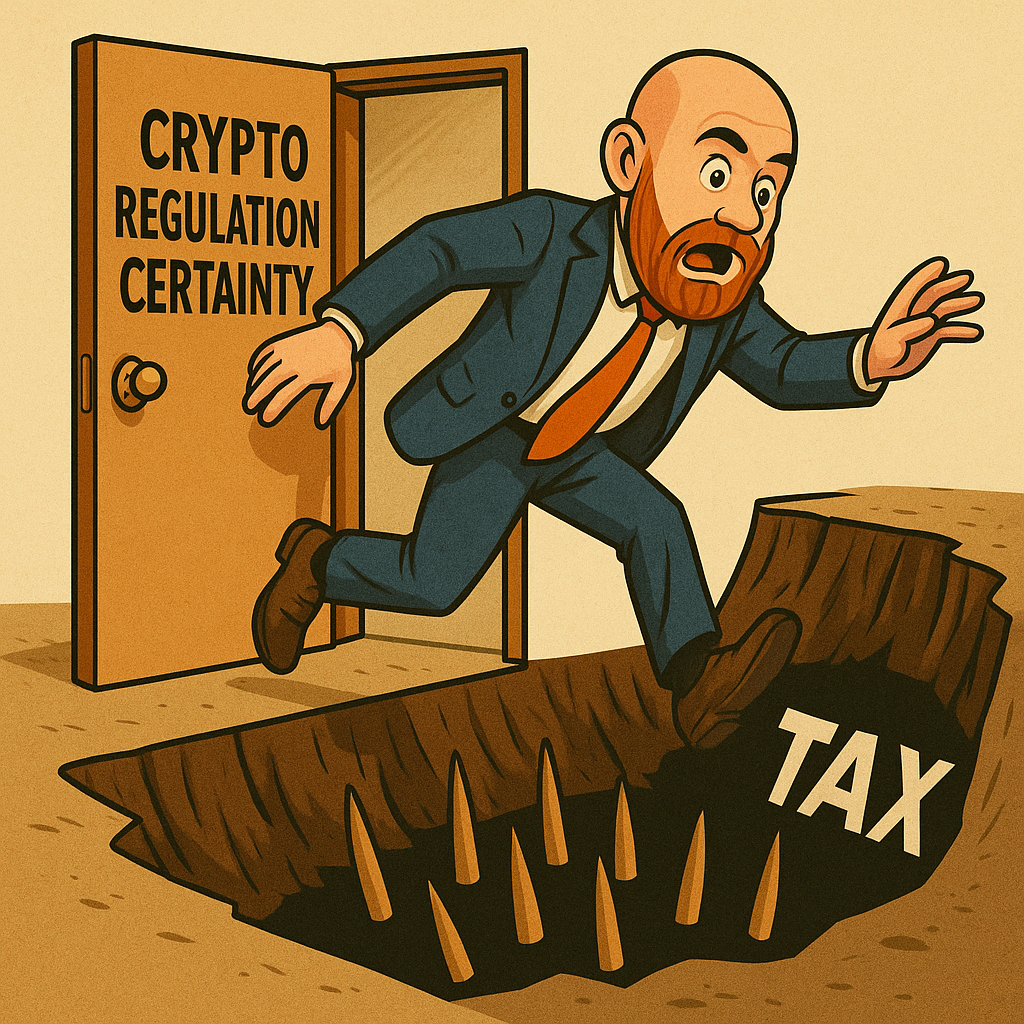
A company that holds an entitlement in a trust and does not call for payment can leave the cash in the trust as working capital. After the High Court's decision in Bendel, that does not create a Division 7A loan. The strategy only works once the trust sits outside the new 30% minimum tax.
This article is part of our guide to restructuring out of the 30% trust tax. It explains how the Bendel strategy works, what it needs from the trust and the company, and where it can still go wrong.
What Bendel decided
On 10 June 2026 the High Court decided Commissioner of Taxation v Bendel [2026] HCA 18 by a 5:2 majority. The trustee of a discretionary trust had resolved to set aside income for a corporate beneficiary and had not paid it. The Commissioner treated the unpaid present entitlement as a Division 7A loan from the company to the trustee.
The majority rejected that treatment. The amounts were held on separate trust for the company, so no relationship of debtor and creditor arose. A company that does not call for payment of its entitlement is not providing credit or financial accommodation (see the majority's reasoning at [71] to [74]).
In practical terms, a company can be entitled to trust income, pay tax on it at the company rate and leave the money with the trustee, without that money being treated as a loan to the trust and without a deemed dividend to its shareholders.
Why it only works once the trust is outside the minimum tax
Bendel is not a standalone strategy. While the trust is a discretionary minimum tax trust, a corporate beneficiary gets no offset for the minimum tax the trustee pays on its share. The Explanatory Memorandum to the Bill says this in terms: the offset is not available to corporate beneficiaries, so the effect of the minimum tax cannot be negated by distributing through a company. Income distributed to a bucket company is therefore taxed at 30% in the trustee's hands and again in the company.
Leaving the entitlement unpaid does nothing about that first layer of tax. The strategy becomes useful only when the trust is not a minimum tax trust, because the trustee then pays no minimum tax and the company is taxed once, at the company rate.
That leaves three hosts, covered in our articles on the fixed trust, the fixed hybrid trust and the election. Bendel sits on top of whichever one you choose. It suits groups that reinvest profits rather than paying them out to individuals.
Structuring the company's entitlement
Company as unitholder in a fixed trust or fixed hybrid trust
A trust is a fixed trust under the new definition if the beneficiaries have fixed entitlements to all of the income and capital, or if there are no material discretionary elements capable of significantly affecting their entitlements or rights to income or capital. A fixed trust is excluded from the minimum tax.
A company can hold units in such a trust. Its entitlement to its share of income is then a fixed right under the deed, taxed in the company at the company rate, and the trustee is not liable for minimum tax. The company can leave that entitlement unpaid, and the trust keeps the cash as working capital.
In a fixed hybrid trust the company can hold the income units while family members hold other classes with different rights. The value of that structure is covered in our article on fixed hybrid trusts.
Company as nominated beneficiary of an electing trust
Under the election, the trustee nominates beneficiaries and the share of income and non-income earnings each is to receive. If the trustee exercises its discretions consistently with the nomination each year, the minimum tax does not apply.
A company can be nominated only if it has no material discretionary elements capable of significantly affecting the rights or interests of its members. It must also be an object of the trust under the deed and must have been in existence on 1 July 2028.
The Explanatory Memorandum is clear that a nomination does not give the beneficiary a fixed interest in trust capital. The company's entitlement is a nominated share of each year's income, which the trustee must continue to give effect to, rather than a unit. For this strategy that distinction matters mainly for the drafting, discussed below.
Two further points follow from the election rules. The company's shareholders cannot change other than on a shareholder's death or a relationship breakdown, because a change for any other reason revokes the election. If the election is revoked, the trustee pays tax on that whole year's net income at the top marginal rate plus Medicare levy, and the minimum tax applies from the following year, as set out in our article on the election.
Drafting the deed and the resolutions
The decision in Bendel turned on a deed that required amounts set aside to be held on separate trust, and on resolutions that set amounts aside without creating a debt. The deed and the resolutions need to be checked and must be on all fours with Bendel.
For a fixed or hybrid trust, that means reviewing the deed to confirm that:
- Separate trust. Income to which a unitholder becomes entitled is held on trust for that unitholder, not mixed into trust property as a general liability of the trustee.
- No debt. Nothing in the deed or the unit terms turns an unpaid entitlement into a loan or a payable with a repayment term.
- Consistent resolutions. Each year's resolution or distribution statement records an entitlement held on trust for the company and does not describe it as a loan or a debt owed by the trustee.
For an electing trust, the same points apply to the resolutions that give effect to the nomination, and the deed also has to allow the election and nomination to operate. A deed that cannot meet the Bendel conditions is a reason to amend it before the first year the strategy is used, not afterwards.
Residual risks
The separate Division 7A rules for unpaid present entitlements still apply. They can be triggered if the trustee makes a payment or loan to a shareholder of the company, or forgives a debt, while the company's entitlement is unpaid. In practice the trustee needs a policy of not lending to, or paying, the company's shareholders or their associates out of the trust's cash while an entitlement is outstanding.
The rules on reimbursement agreements in section 100A of the Income Tax Assessment Act 1936 also still apply. Part IVA applies as well, so the structure should be chosen for what the family needs it to do.
There are two further uncertainties. The ATO published a decision impact statement on 26 June 2026 and is reviewing its existing rulings on unpaid present entitlements, so its view of how Bendel applies is not yet settled. There is also a 2018-19 Budget measure to bring unpaid present entitlements within Division 7A. It has been announced but not enacted, and Treasury asked for feedback on implementing it in the July 2026 consultation paper.
What remains if Bendel is reversed
The Bendel benefit could be narrowed by the ATO's review or removed by legislation, and any plan should assume that possibility. The host structure does not depend on it.
Even if the benefit is reversed, there is still significant value in a hybrid fixed trust with an income beneficiary being a company. The trust sits outside the minimum tax, the company pays tax at the company rate on its share, and the family retains the ability to give different members different rights. What changes is how the company's unpaid entitlement is dealt with, which may mean paying it out, or putting it on commercial loan terms, instead of leaving it unpaid.
Next step
If your group reinvests profits through a bucket company, the right time to review the deed and the year-end resolutions is before the roll-over window opens on 1 July 2027. Contact us to review your trust deed and structure, and to work out which host structure suits you.
This material is produced by Cadena Legal, a Queensland-registered legal practice. It is intended to provide general information and opinions on legal topics, current at the time of first publication. The contents do not constitute legal advice and should not be relied upon as such.