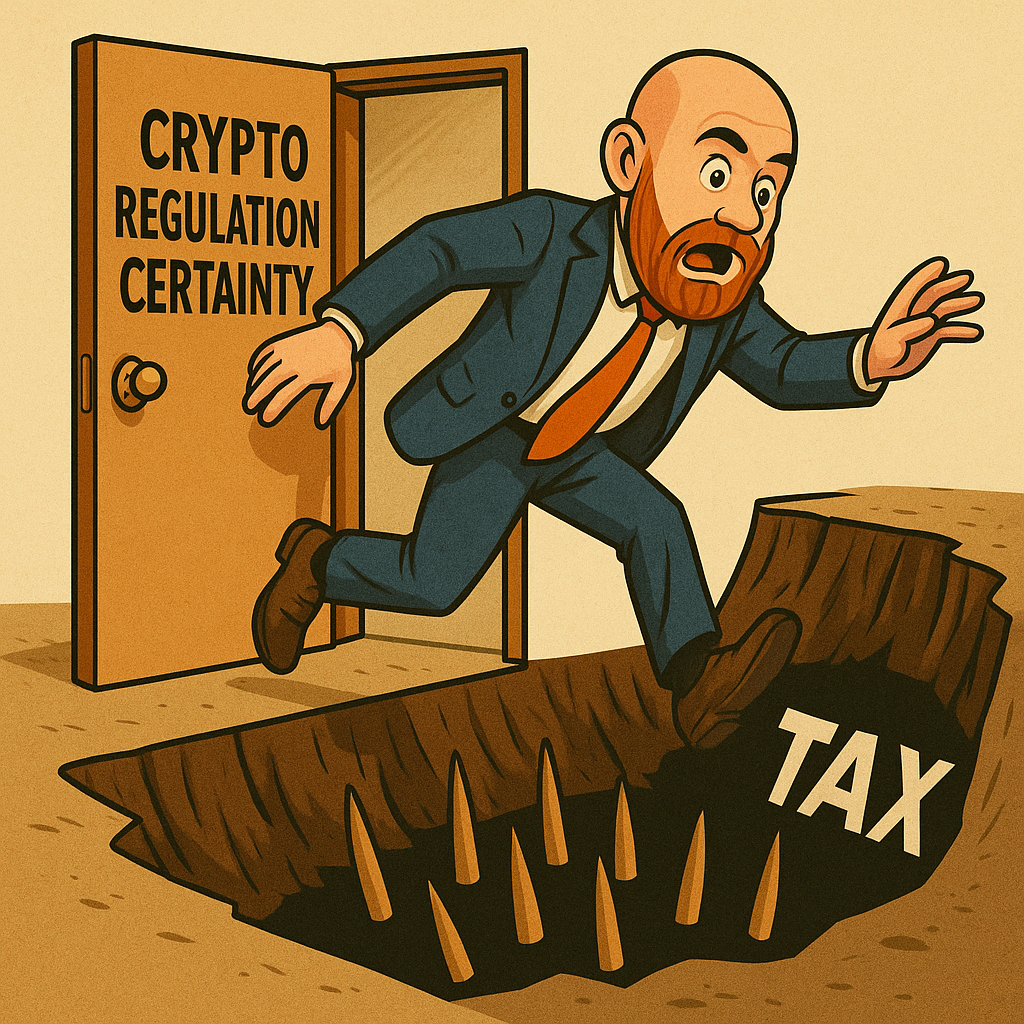
From 1 July 2028 the trustee of a discretionary trust pays tax at a minimum of 30% on the trust's income. There are five ways to stay outside the tax, and all of them mean giving up some of the trustee's discretion. This article goes through how the tax works, the easy ways out, each of the five strategies and the type of trust each one suits.
What is the 30% minimum tax on discretionary trusts?
The Government announced the measure in the 2026-27 Budget. Treasury released a consultation paper on 8 July 2026 and exposure draft legislation in September 2026. The Bills were introduced on 14 October 2026 and intense debate and dealmaking with Labor and the Greens ensured.
The main bill is the Treasury Laws Amendment (Tax Reform No. 3) Bill 2026 which was passed on 26 November 2026.
The trustee is liable for tax at 30% on the trust's "minimum tax income". If the trustee already pays tax on that income at a lower rate, the minimum tax tops it up to 30%.
The rules apply to income years starting on or after 1 July 2028. For most trusts that is the 2028-29 income year.
Which trusts are caught?
The legislation does not use the term "discretionary trust" as the tax law does not define that term. It instead applies to a "minimum tax trust", which is defined as any trust that is not on a list of exclusions.
The exclusions are forfixed trusts, special disability trusts, deceased estates, complying superannuation entities, certain special purpose entities, employee share trusts and approved worker entitlement funds. The Minister can add other kinds of trust by legislative instrument, including widely held trusts and trusts used for collective investment.
A usual family discretionary trust is not on that list, so it is caught, as was the intention. A hybrid trust with a discretionary class is also caught, as it is not a fixed trust.
The test applies at any time during the income year. A trust that is a minimum tax trust for one day is treated as one for the whole year, and the tax applies to the whole year's net income.
How beneficiaries are taxed
The trustee pays the 30%, and the beneficiary is still assessed on their share of the trust's net income in the usual way. An individual beneficiary then gets a tax offset equal to 30% of their share.
The offset is not refundable and cannot be carried forward. A beneficiary whose own tax on the distribution is less than 30% loses the difference.
The Explanatory Memorandum gives an example. James is made presently entitled to $2,400 from a minimum tax trust and gets an offset of $720. His own tax liability for the year is only $308, so $412 of the offset is wasted.
The result is that distributing to an adult child or a non-working spouse on a low marginal rate will not get the tax under 30%. A beneficiary on a higher rate pays the difference between 30% and their own rate.
Franking credits
If the trust receives franked dividends, the trustee uses the franking credits against the minimum tax. Excess credits are refundable to the trustee. The beneficiaries do not get the franking credits and instead claim the 30% offset.
Why bucket companies no longer work
Companies get no offset. The offset is not available to a body corporate, and the Explanatory Memorandum says this is so the minimum tax cannot be negated by distributing through a company.
The company is still assessed on its share. Income distributed to a bucket company is taxed at 30% in the trustee's hands and then again at the company rate. The Explanatory Memorandum has an example of a company beneficiary paying its full tax liability with no offset for the tax the trustee has already paid.
For most family groups this ends the discretionary trust and bucket company structure.
The easy ways out
Before looking at a restructure, check whether the tax will cost the trust anything. Some trusts will pay little or no extra tax without changing the deed.
All beneficiaries already pay more than 30%
The trustee pays 30% and each individual beneficiary gets a 30% offset against their own income tax. If every beneficiary has enough tax of their own to use the whole offset, there is no extra tax overall. The beneficiaries pay the difference between 30% and their own rate, as they do now.
The offset is applied against the beneficiary's total income tax for the year, so a beneficiary with wages or other income can use it against the tax on that income as well. In the Explanatory Memorandum's example it does not reduce the Medicare levy.
The cost in this case is cash flow, as the trustee has to fund the 30% before the beneficiaries get the benefit of the offset. It also only works where the distributions go to individuals, as a company gets no offset.
Non-resident beneficiaries receiving franked dividends
A non-resident beneficiary's share of a franked dividend is excluded from the minimum tax, along with the franking credit. The franked part of a dividend paid to a non-resident is already free of withholding tax and is not assessable in Australia, and the minimum tax does not change that.
A trust that only passes franked dividends through to non-resident beneficiaries will not pay the minimum tax on that income.
Unfranked dividends, interest and royalties that go to a non-resident and are subject to withholding tax are also excluded. Other income distributed to a non-resident, such as rent or business income, is still caught.
Primary production income
Primary production income is excluded. A farming family that runs its business through a discretionary trust does not pay the minimum tax on that income, although other income of the trust is still caught.
Testamentary trusts
Income of a testamentary trust is excluded if the trust was set up under a will or on intestacy and is administered for genuine testamentary purposes. The Senate amended this exclusion so that existing wills do not need to be redrafted.
For a testamentary trust established on or after 1 July 2028, the exclusion depends on who receives the income. Distributions to individuals keep the exclusion, and distributions to companies do not.
Children and charities
There are exclusions for certain income of children under 18, including children covered by the existing rules for vulnerable minors.
Distributions to registered charities and deductible gift recipients can be excluded, but only if conditions set by the Minister are met. Those conditions have not been made yet.
Trusts that are already outside the rules
A trust that is already a fixed trust, a deceased estate or a special disability trust is not a minimum tax trust and does not need to do anything.
If none of these apply, the five strategies below are the ways to take the trust outside the tax.

1. Convert to a fixed trust
A fixed trust is not a minimum tax trust. The Bill replaces the definition of a fixed trust. Under the first limb, a trust is fixed if the beneficiaries have fixed entitlements to all of the income and capital.
A fixed entitlement is a vested and indefeasible interest, which is the existing test. The Commissioner keeps the discretion to treat an interest as fixed, although the Explanatory Memorandum expects that discretion to be needed less often under the new definition.
How it works
The trustee amends the deed so that each beneficiary has a defined share and the trustee no longer decides who gets what. The deed's amendment power has to allow this, and the trustee has to be able to justify the change to the beneficiaries who miss out.
It suits families who have already worked out who owns what. It also suits trusts that cannot use the election or the roll-over.
It takes a legal practitioner to properly review a trust deed and prepare the variations necessary for it to become a fixed trust, accountants or tax agents should not be engaged for this work.
What to watch
There is no roll-over for converting a trust in place, but none is usually needed. Subdivision 126-Z only applies where assets are transferred to another entity. The amendment needs to be checked against CGT events E1 and E2 before the deed is signed. The ATO's published view is that a valid amendment does not trigger those events unless it ends the trust and creates a new one, or settles an asset on a different trust.
State duty also needs to be checked. In New South Wales, duty is charged on a transaction that results in a change in beneficial ownership of dutiable property, and that includes a change in equitable interests.
Timing is key as a trust that is discretionary for one day of an income year is caught for the whole year. The conversion needs to be done before 1 July 2028.
2. Use a fixed hybrid trust
The new definition has a second limb which makes hybrid trusts a useful again. A trust is also fixed if there are no material discretionary elements that can significantly affect the beneficiaries' entitlements to income or capital.
The Explanatory Memorandum says the old definition had been read narrowly, and the second limb is meant to cover trusts where the trustee has some residual discretion that does not affect what the beneficiaries are entitled to.
How it works
This allows a unit trust with more than one class of units. The Explanatory Memorandum uses an example of a trust with A units and B units that have different rights, where the rights are clearly defined and cannot be varied. The trustee in that example can still decide how to invest, can decide the timing and manner of distributions, and can issue and redeem units at a fair valuation.
The legislation lists the factors that suggest a trust is fixed. Beneficiaries need clearly defined and enforceable rights to all of the income and capital. Powers to issue, redeem or vary interests must not be able to significantly change existing entitlements or their value.
The deed should only be able to be amended with the consent of all or a majority of beneficiaries, by special resolution, or in a way that cannot materially harm their entitlements. This consent is especially useful in family groups to restructure with the benefit of being able to rejig the economic ownership later in flexible ways.
It suits families where different people need different rights, for example income units for one generation and capital units for the next.
What to watch
The older style of discretionary hybrid trust will not qualify. If the trustee can choose who receives income or capital, or how much, the trust is not fixed.
These must also be drafted carefully, by legal practitioners and not accountants or tax agents. The factors in the legislation only "suggest" that a trust is fixed, and the Explanatory Memorandum says they are not necessarily determinative. The ATO is expected to publish guidance now that the Bills have passed.
State land tax needs to be checked separately. In New South Wales a unit trust with more than one class of units is still a special trust for land tax, which means no tax-free threshold.
3. Use Bendel strategies
On 10 June 2026 the High Court decided Commissioner of Taxation v Bendel [2026] HCA 18 by a 5:2 majority. The trustee of a discretionary trust had resolved to set aside income for a corporate beneficiary and had not paid it. The Commissioner treated the unpaid present entitlement as a Division 7A loan from the company to the trustee.
The majority held it was not a loan. The amounts were held on separate trust for the company and no debtor and creditor relationship arose. A company that does not call for payment of its entitlement is not providing credit or financial accommodation.
There was some disappointment that Bendel was decided and then the benefit of trusts is taken away entirely by legislation, but that is not the case as this strategy makes good use of the Bendel precedent.
How it works
Bendel does not help while the trust is discretionary, as the company still gets no offset for the minimum tax. It only becomes useful once the trust is fixed or has made the election.
A company can be a unitholder in a fixed trust or a nominated beneficiary of an electing trust. The company then holds a fixed entitlement and pays tax at the company rate, with no minimum tax. The entitlement can be left unpaid and the cash can stay in the trust as working capital, without a deemed dividend under Division 7A.
It suits groups that reinvest profits rather than paying them out to individuals.
What to watch
The decision turned on a deed that required amounts set aside to be held on separate trust, and on resolutions that set amounts aside without creating a debt. The deed and the resolutions need to be checked and must be "on all fours" with Bendel (which is shockingly bad mental imagery).
The separate Division 7A rules for unpaid present entitlements still apply. They can be triggered if the trustee makes a payment or loan to a shareholder of the company, or forgives a debt, while the company's entitlement is unpaid. The rules on reimbursement agreements also still apply from section 100A. The ATO published a decision impact statement on 26 June 2026 and is reviewing its existing rulings on unpaid present entitlements.
There is also a 2018-19 Budget measure to bring unpaid present entitlements within Division 7A. It has been announced but not enacted, and Treasury asked for feedback on implementing it in the July 2026 consultation paper.
Even if the benefit of Bendel is reversed, there is still signifcant value in a hybrid fixed trust with an income beneficiary being a company.
4. Make the election
The new rules let a trustee elect out of the minimum tax. The legislation calls a trust that has elected an "excluded election trust". While the election is in force the trust is taken not to be a minimum tax trust.
How it works
The trustee makes a nomination with the election. The nomination names the beneficiaries and fixes each one's percentage. The percentages must add up to 100% and be the same for income and for capital gains and other non-income amounts.
Each nominated beneficiary must have been capable of benefiting under the trust on 1 July 2028. Superannuation funds and partnerships cannot be nominated. A company can be nominated only if it has no material discretionary elements, so a company where the directors can choose which share class receives a dividend is unlikely to qualify. Another trust can be nominated, although a discretionary trust that receives the income will pay the minimum tax itself unless it also elects.
The nomination can also set aside a percentage for charities and deductible gift recipients as a class. That amount must actually be paid by the end of the following income year.
The trust must exist on 1 July 2028. The election can only be made in the first income year starting on or after that date, and the trustee notifies the Commissioner by the time that year's return is lodged.
Why it suits land rich trusts
This is the option we expect most land rich trusts to use. The assets stay with the same trustee. The Explanatory Memorandum says the nomination does not give the beneficiaries a fixed interest in the trust property, does not change the trust or the trustee's powers, and does not require a resettlement.
It also says the election is expected to limit restructuring costs such as state and territory stamp duties. Under the roll-over, state duty still applies to every transfer.
What to watch
The trade-off is that the trust is locked in. The election can only be made once. The percentages can only change if a nominated beneficiary dies or two nominated beneficiaries go through a relationship breakdown.
If the trustee distributes outside the nomination, the election is revoked automatically. The beneficiaries are treated as never having been entitled for that year, the trustee pays tax on all of that year's net income at the top marginal rate plus Medicare levy, and the minimum tax applies in later years. The trustee can also choose to revoke the election, with the same top rate consequence.
The Commissioner has a discretion to disregard some breaches, including inadvertent errors, and a refusal can be objected to. We would not plan around that discretion.
Capital distributions have to follow the same percentages. The percentages should be set with the eventual sale of the land in mind, as the capital gain will follow them.
5. Roll over under Subdivision 126-Z
New Subdivision 126-Z lets the trustee transfer the assets to a new entity with no direct income tax consequences. The new entity can be a company, an individual, a partnership or the trustee of another trust, provided that trust is not itself a minimum tax trust. A fixed trust or a properly drafted fixed hybrid trust qualifies.
How it works
Transfers must happen between 1 July 2027 and 30 June 2030. The window opens a year before the tax starts, so a restructure can be finished before the minimum tax applies. The transfers can also be spread over more than one income year, with a notice to the Commissioner each year.
The new entity takes over the existing cost base of each asset, so the gain is deferred and not removed. The same applies to trading stock, revenue assets and depreciating assets. No family trust distribution tax arises on the transfer. For the small business CGT concessions, the active asset test and the 15-year period carry across to the new entity.
Both the trustee and the new entity have to choose the roll-over in the approved form, generally by the time the return for the year of the first transfer is lodged. Unlike the small business restructure roll-over, there is no requirement to show a genuine restructure of an ongoing business. It is available to trusts that hold passive investments.
What to watch
The conditions are strict. All of the assets must go to a single transferee by 30 June 2030. The exceptions are limited to assets that cannot be transferred, primary production assets, assets needed to meet the trust's liabilities or winding up costs, and assets that cost $1,000 or less. Holding back one substantial asset means the relief is lost for all of them.
Where a family trust election is in force, every individual with a direct or indirect interest in the new entity must have been a beneficiary and a member of the family group. For a trust without a family trust election, the continuity test depends on a Ministerial determination that has not been made yet.
The new entity, and every entity in its ownership chain, must have no material discretionary elements until the end of the fourth income year after the last transfer. If that fails, the Commissioner can amend the assessments and reverse the relief. The trustee and the new entity must also be Australian residents.
If the new entity issues units or shares to the old trust in return for the assets, those interests have to be passed on to the individuals who will own the new entity before the window closes. The Explanatory Memorandum says the CGT rules for that step will come in later legislation.
State duty still applies, as the roll-over only covers income tax. A trustee also cannot use both the roll-over and the election.
Which strategy fits
For most trusts we would ask four questions in this order.
- If the aim is to keep profits in a company, use Bendel together with one of the other four strategies.
- If the trust is land rich, make the election.
- If the family wants a new entity and meets the conditions, use the Subdivision 126-Z roll-over.
- If family members need different rights, use a fixed hybrid trust. If they do not, convert to a fixed trust.
Check the easy ways out first, as a trust whose beneficiaries are all above 30% may not need to change anything. If the family still needs full discretion every year, none of the five strategies will suit. In that case the trust pays the 30%, distributes to individuals who can use the offset and stops distributing to companies.
Key dates
- 26 November 2026 is the date the Bills passed both Houses.
- 1 July 2027 is the date the Subdivision 126-Z roll-over window opens.
- 1 July 2028 is the date the minimum tax starts, and the date a trust must exist to be able to elect.
- The 2028-29 income year is the only year in which most trusts can make the election.
- 30 June 2030 is the date the roll-over window closes.
Common questions
When does the 30% trust tax start?
It applies to income years starting on or after 1 July 2028. Distributions for the 2026-27 and 2027-28 income years are taxed under the existing rules.
Does the minimum tax apply to unit trusts?
It does not apply to a unit trust that is a fixed trust under the new definition. A unit trust where the trustee has a real discretion over who receives income or capital is not fixed and is caught.
Can I still distribute to a bucket company?
A discretionary trust can still distribute to a company, but the income is taxed at 30% in the trustee's hands and again in the company with no offset. A company can still be used as a unitholder of a fixed trust or as a nominated beneficiary of an electing trust.
Does it apply to testamentary trusts?
Income of a genuine testamentary trust is excluded, subject to integrity rules. For testamentary trusts established on or after 1 July 2028, income distributed to a company or a discretionary trust is not excluded.
Does it apply to farming trusts?
Primary production income is excluded from the minimum tax. Other income of the same trust, such as rent or investment income, is not excluded.
Can I make the election later if I do nothing now?
The election can only be made in the first income year starting on or after 1 July 2028. A trust that misses that year cannot elect later, and a trust that is settled after 1 July 2028 cannot elect at all.
Do I pay more tax if all the beneficiaries are on high marginal rates?
Generally no. The trustee pays 30% and each individual beneficiary gets a 30% offset, so a beneficiary with enough tax of their own to use the offset pays the same overall. The trustee has to fund the 30% first.
Does it apply to distributions to non-residents?
Franked dividends distributed to a non-resident beneficiary are excluded, as are dividends, interest and royalties subject to withholding tax. Other income distributed to a non-resident is caught.
What happens if I do nothing?
The trust stays a minimum tax trust and the trustee pays 30% on its net income each year from 2028-29. Individual beneficiaries get the non-refundable offset and companies get nothing.
What to do before 1 July 2027
The roll-over window opens on 1 July 2027 and the election can only be made in the 2028-29 income year, so the planning should be done before 1 July 2027.
We would start by reviewing the trust deed, the family trust election, the assets and their duty exposure, and who would hold each fixed share. Further legislation is also expected on residency, CGT, reporting and integrity rules, so the position needs to be checked again as that is released.
The general anti-avoidance rules still apply, so the strategy should be chosen for what the family needs the structure to do.
Contact us if you would like us to review your trust.
This material is produced by Cadena Legal, a Queensland-registered legal practice. It is intended to provide general information and opinions on legal topics, current at the time of first publication. The contents do not constitute legal advice and should not be relied upon as such.